

-
$120 Million Verdict
Workplace Accident
-
$72 Million Verdict
Personal Injury
-
$63 Million Settlement
Fraud
-
$60 Million Settlement
Wrongful Death
-
$36 Million Settlement
Complex Product Liability
-
$23 Million Settlement
Wrongful Death


Radiology Error Lawyer in Birmingham
When the Breakdown Happens Somewhere Between the Scan and the Treatment
A radiology malpractice case is rarely just about whether an image was “read wrong.”
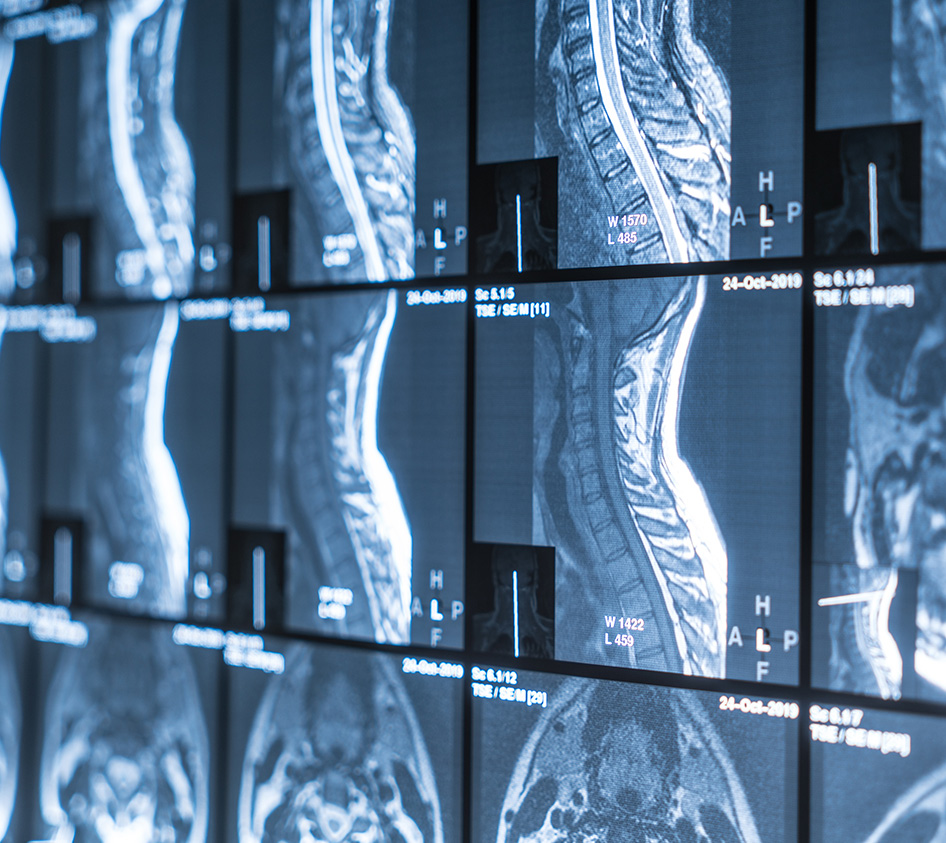
Diagnostic imaging passes through several stages. The study has to be performed adequately. A qualified physician has to interpret what the images show. Significant findings have to be reported and, when circumstances require it, communicated in time for the treating team to respond. Then the clinical team has to act on that information.
A breakdown anywhere in that chain can delay diagnosis or treatment.
Goldasich, Vick, & McCartney handles serious medical-malpractice cases involving catastrophic harm in Alabama. Our firm has recovered more than $800 million for clients across its practice and secured more than 85 settlements and verdicts of $1 million or greater.
If a missed or misread scan caused serious harm, call (205) 922-7146 or contact us online to discuss the imaging, medical records, and next steps with our attorneys.










First, We Listen. Then, We Fight to Win.
Over $800 Million Recovered For Our Clients
-
Focused on Catastrophic Cases
We dedicate our practice to serious, life-altering injuries, bringing the experience and resources needed to handle the most complex claims.
-
Over $800 Million Recovered
Our results speak for themselves, with over $800 million dollars recovered for clients through settlements and verdicts in high-stakes, catastrophic cases.
-
Personal Attention, Powerful Advocacy
We combine hands-on, responsive client service with aggressive strategy, ensuring every client gets the focus, strategy, and results their case deserves.
-
Every Case Prepared for Trial
Our strategy includes preparing every case for a potential trial, giving us leverage in negotiations and positioning our clients for maximum compensation.
Where the Diagnostic Imaging Chain Can Break Down
Different types of imaging errors can involve different healthcare professionals and different evidence.
Image Acquisition Problems
Before an image can be interpreted, the study has to be performed adequately.
Depending on the modality and clinical situation, issues may involve positioning, image quality, contrast administration, incomplete imaging, or another technical problem that reduces the usefulness of the study.
A technical problem does not automatically make the interpreting radiologist responsible. The investigation has to identify who performed the study, who was responsible for its quality, what limitations were documented, and whether further imaging should have been requested.
Interpretation Errors
The central allegation in many radiology malpractice cases is that a significant abnormality was visible but overlooked or incorrectly characterized.
Potential claims can involve:
- Suspicious masses or lesions
- Pulmonary embolism
- Aneurysm or other vascular abnormalities
- Spinal, hip, skull, or other fractures
- Intracranial bleeding
- Stroke-related findings
- Infection or other significant disease processes
The question is not simply whether another radiologist can identify the finding in hindsight.
The review must address whether a similarly situated radiologist interpreting the study under the circumstances should have identified or characterized the finding differently at the time.
Reporting and Communication Failures
Sometimes the radiologist identifies the abnormality correctly, but the information does not result in timely treatment.
The written report, preliminary interpretations, communication logs, electronic acknowledgments, and documentation of urgent or unexpected findings can become important evidence.
Radiology practice guidance recognizes that some urgent, discrepant, or significant unexpected findings may require communication beyond the routine final report. Whether a particular case required additional communication remains a case-specific medical and legal question.
Follow-Up Failures After a Correct Report
The breakdown can also occur after the radiologist has done the interpretation correctly.
An ordering physician or treating team may receive a report recommending additional imaging, biopsy, specialist evaluation, or urgent treatment and fail to act.
When that happens, the case may involve a broader misdiagnosis or delayed-diagnosis claim rather than negligence by the interpreting radiologist alone.
How We Evaluate the Original Imaging
The written radiology report is only part of the evidence.
When appropriate, our investigation includes obtaining the original imaging studies so they can be reviewed by properly qualified medical professionals. That comparison can help determine whether the relevant abnormality was visible, whether the interpretation was medically reasonable, and whether the written report accurately communicated the finding.
Depending on the case, the evidence may include:
- Original CT, MRI, X-ray, ultrasound, or mammography images
- Preliminary and final radiology reports
- Prior imaging used for comparison
- Imaging orders and clinical history provided to the radiologist
- Communication logs
- Electronic health-record timestamps
- Follow-up recommendations
- Ordering-physician records
- Hospital or radiology-department policies
- Subsequent imaging showing progression of the condition
- Pathology, surgical, or treatment records
Preserving the original images matters. A later report summarizing what someone saw is not a substitute for reviewing the underlying study when interpretation itself is disputed.
Who May Be Legally Responsible?
The answer depends on where the diagnostic chain failed.
A case may involve an interpreting radiologist, a treating or ordering provider who failed to act on a report, or a healthcare organization under an applicable theory of liability.
A facility may also become relevant when the allegations involve systems for communication, imaging quality, staffing, record handling, or follow-up.
The existence of an institutional policy does not by itself establish the legal standard of care. It can, however, become part of the factual record that qualified professionals evaluate along with the medical evidence.
For cases involving broader institutional failures, our Birmingham hospital malpractice attorneys evaluate whether hospital-level conduct contributed to the injury.
Patient Follow-Up Can Become a Defense Issue
Alabama recognizes contributory negligence as a complete defense in appropriate negligence cases, including some medical-malpractice disputes.
That does not mean any mistake by a patient automatically defeats a claim.
The evidence may need to show what follow-up instructions were actually communicated, what the patient knew or reasonably should have understood, whether appointments were scheduled or missed, and whether the patient's conduct contributed to the harm.
Those records can matter in radiology cases involving recommendations for repeat imaging, biopsy, specialist consultation, or additional testing.
For that reason, appointment records, patient-portal messages, letters, telephone notes, and other follow-up communications can be just as important as the radiology report itself.
Alabama Filing Deadlines for Radiology Malpractice Claims
Alabama generally requires medical-malpractice actions to be filed within two years of the act or omission giving rise to the claim.
If the claim was not and could not reasonably have been discovered during that period, the statute provides a limited six-month discovery provision.
Alabama also generally imposes a four-year outer limit, subject to statutory exceptions. One important exception applies when the injured patient was under four years old at the time of the alleged malpractice, in which case the statute provides additional time up to the child's eighth birthday.
Radiology errors can create difficult timing issues because a missed abnormality may remain undiscovered for months or years.
A patient should therefore have the actual imaging dates, later diagnosis, and discovery timeline reviewed rather than relying on a generalized online deadline.
Compensation Depends on What the Delay Actually Changed
A radiology error does not create damages simply because an interpretation was incorrect.
The compensable harm must be connected to the alleged malpractice.
Depending on the case, damages can involve additional medical treatment, lost income or earning capacity, physical impairment, pain and suffering, disability, and other losses caused by a delayed or incorrect diagnosis.
Alabama does not currently enforce the former statutory $400,000 cap on medical-malpractice noneconomic damages that was struck down by the Alabama Supreme Court. Other damages rules can still apply depending on the type of recovery sought.
The medical evidence therefore remains central to both liability and valuation.
Trial-Ready Resources for Complex Diagnostic Cases
Goldasich, Vick, & McCartney focuses on high-stakes catastrophic injury litigation and prepares serious cases for trial from the outset.
Our published case results include more than $800 million recovered across the firm's practice, more than 85 settlements and verdicts of $1 million or greater, and a $10 million medical-malpractice verdict.
The firm has also published a $2 million medical-malpractice settlement arising from an alleged failure to diagnose a pulmonary embolism.
Those prior matters do not establish the value or likely result of a radiology malpractice claim. They do demonstrate experience litigating serious diagnostic and medical-negligence cases where causation and medical evidence are disputed.
Contact us or call (205) 922-7146 to speak with Goldasich, Vick, & McCartney about a suspected radiology error.
Outstanding Service“Everyone at this firm has provided me with outstanding service! They always make me feel like what I have to say is important, and they go way above what is expected! They have been courteous, professional, and friendly.”- Dave P.
-
 Leading With Humility Meet the Team
Learn more about our experienced advocates and our unique approach to fighting for you.
Read More -
 News, Tips & Updates Our Blog
We'll be your resource! Get answers to your questions and learn in our blog.
Read More -
 In Their Own Words Five-Star Client Reviews
Explore our client testimonials and see the difference working with our dedicated team can make.
Read More